DIT PACKAGING / CUSTOM FLEXIBLE PACKAGING
Custom printed spout pouches
A spout pouch is a flexible bag with a dispensing spout and matching cap. DIT supplies custom printed spout pouches for liquid and refill projects, with a standing bottom or a flat three-side-seal construction. Send your contents, fill volume and filling method to review the pouch, fitment and material together.
Unsure which spout or pouch size to use? Start with the contents, target capacity and filling method.
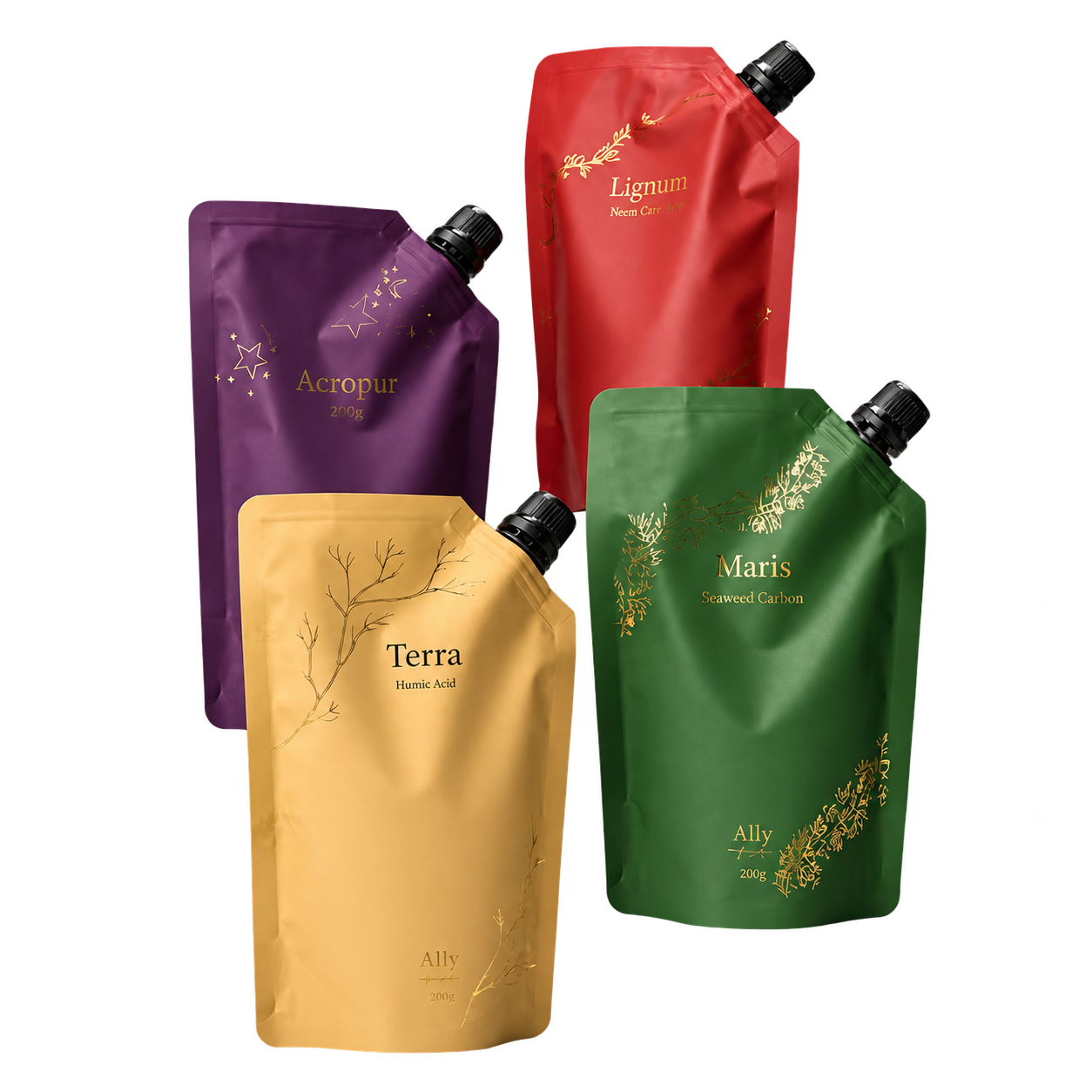
At a glance
- Construction
- A standing bottom-gusset pouch or a flat three-side-seal spout pouch, as specified.
- Start with
- Contents, fill volume, flow characteristics and filling method.
- Fitment
- Confirm spout position, inner diameter, cap and filling access.
- Diameter examples
- 8.6, 15, 16 and 22 mm inner openings for specification review.
- Order details
- Quantity per design, material, artwork status and destination.
Not sure about a detail? Start with your product and quantity.
Download the spout pouch quotation brief (.txt) · Fill in what you know and send it to Jack.
Liquid spout pouch capacity: start with the contents
A spout pouch combines a flexible bag with a dispensing fitment. For liquid and refill packaging projects, start with the actual contents rather than selecting only an attractive bag shape. Tell us whether the product flows freely, is viscous or contains particles, and describe any contact or storage requirements.
State the target fill volume, filling temperature and the space your process needs above the contents. Pouch dimensions and gusset depth influence capacity, but a water-based capacity reference does not establish the usable fill volume of every product. Review a sample with your contents and filling equipment before confirming the final size.
| Detail | Information to provide |
|---|---|
| Contents | Product name, flow characteristics and whether it contains particles. |
| Fill amount | Target volume or weight, plus a reference pack or dimensions if available. |
| Processing | Filling temperature, filling route and any treatment after filling. |
| Use and storage | How the contents will be dispensed, stored and transported. |
Stand-up spout pouches and liquid refill bags
A stand-up pouch with a spout combines a bottom gusset with a dispensing fitment. The gusset defines the standing base; the spout and cap define how the contents leave the pack. DIT also discusses a no-bottom version as a three-side-seal spout pouch. Identify the intended construction on a drawing instead of relying on the word “spout” to define the shape.
For a household liquid refill project, explain whether the pouch will dispense directly or transfer its contents into another container. Include the target container opening, desired flow and storage conditions. Material, fitment and seal compatibility must be assessed for the formulation and filling process.
| Your packaging brief | What to include in the specification |
|---|---|
| Upright retail display | Finished width, height and a labelled bottom-gusset measurement; a reference pack and required fill volume. |
| Flat pack without a bottom gusset | Finished width and height, three-side-seal layout and spout position; review the filled presentation rather than assuming it will stand. |
| Refilling another container | Target container opening, desired flow, spout position and how the pouch will be held while pouring. |
| Dispensing over several uses | Product flow characteristics, proposed cap and expected handling between uses. |
| Household liquid compatibility | Relevant product-contact requirements, storage conditions, filling temperature and an existing approved material specification if available. |
See how to specify a stand-up pouch bottom gusset
Understand the three-side-seal construction without a bottom gusset
Spout pouches with caps: position, diameter and filling
Show the intended spout position on the drawing: for example, a corner or top position. Placement affects the available artwork, how the pouch is handled and the clearance needed during filling. Confirm how the empty pouch should be supplied and whether filling takes place through the fitment or an agreed open edge.
Spout inner-diameter examples available for specification review include 8.6 mm, 15 mm, 16 mm and 22 mm. These figures describe the internal opening, not the outside size of the cap. The suitable option depends on the contents, dispensing requirement and filling equipment; every diameter is not automatically available with every pouch construction.
Send your filling nozzle or machine requirements if known, along with any cap requirements. The fitment, cap and pouch seal need to be reviewed as an assembly. Agree the sample and checks for your actual filling and handling conditions before ordering printed production.
| Decision | What to review before ordering |
|---|---|
| Corner spout pouch | Mark the corner, fitment angle and seal area on the drawing; check the intended pouring motion and filling clearance. |
| Top spout pouch | Specify the position along the top edge, fitment clearance and how the pouch is held during filling and capping. |
| Filling through the spout | Provide nozzle and machine requirements, the required inner opening and the condition of the cap on supplied pouches. |
| Filling through an open edge | Mark the open filling edge and remaining final-seal area, and confirm which seams and fitments arrive already sealed. |
- Mark the desired fitment position and keep the printable panel clear of its sealing area.
- Label the required inner diameter rather than measuring only the cap.
- Confirm the filling opening and the condition in which empty pouches will arrive.
- Provide any existing fitment drawing or machine specification for comparison.
Review the pouch, spout and cap as one sample
Before ordering printed production, agree a sample review using your actual contents, filling equipment and dispensing method. Record the proposed pouch, fitment and cap together so a later component change is visible. Your packing or quality team should define the review conditions and acceptance criteria for the product.
| Sample review | What to provide or record |
|---|---|
| Filling compatibility | Filling route, nozzle or equipment drawing, filling temperature and the condition in which empty pouches and caps are supplied. |
| Dispensing | Actual contents, receiving-container opening and intended pouring motion; record flow, remaining contents and handling observations. |
| Closure and seals | The paired spout and cap, agreed closing method and seal layout. Record any issue and its location under the agreed review conditions. |
| Storage and handling | The conditions your team needs reviewed, including temperature, orientation, duration and handling; agree these before evaluating samples. |
| Approval record | Finished dimensions, complete laminate, fitment and cap reference, artwork version and agreed acceptance requirements. |
- A successful filling demonstration does not establish shelf life or compatibility for every formulation. Keep any further product-contact, storage or transport evaluation tied to the final specification.
Custom printing, materials and artwork for spout pouches
Material selection starts with the contents and the packing process. Share your existing laminate and total thickness if they are already approved; otherwise describe the performance and destination-market requirements you need assessed. A printed spout pouch example does not establish compatibility with a food, cosmetic or household formulation.
Confirm whether the design needs a standing bottom and label the gusset dimensions clearly. On a stand-up construction, distinguish the folded half-bottom from its expanded depth. Request a dimensioned dieline showing the fitment area, folds, seals and artwork margins before final design approval.
List each artwork and its quantity separately. The proposed digital or gravure printing route, laminate and fitment combination determine the order specification. Share the destination and desired arrival date so sample preparation, artwork approval, production and transport can be discussed as separate steps.
Prepare quantities and artwork for multiple printed designs
An example brief for replacing a bottle with a refill pouch
This is a planning example, not a completed customer project or a claim of lower cost or environmental impact. Begin with the existing bottle and describe the part of the refill experience you want to improve.
- The pouch will refill this container: include its opening diameter and a photo or drawing.
- The contents and intended fill are: identify the formulation type, flow characteristics and amount.
- The packing process is: explain how the empty pouch is filled, closed and handled.
- The sample must help us decide: specify the fit, controlled pouring, remaining contents, closure or handling point to review.
Discuss a refill pouch sample around my container and contents
Request a custom spout pouch quotation
Start with your product, target fill volume, approximate quantity and delivery country. Add a reference bag or fitment drawing when available. If the size, material or spout is undecided, say so in the brief and describe the requirement you need it to meet.
For comparable quotations, use the same finished size, laminate and thickness, spout and cap, artwork count and quantity per design. Confirm the proposed printing route, applicable minimum, sample method and any setup costs. A combined quantity across several sizes or fitments does not define the minimum for each version.
- Contents, flow characteristics or particles, and target volume or weight.
- Filling route, filling temperature and equipment requirements.
- Preferred spout position, inner diameter and cap, if known.
- Finished dimensions, standing-bottom requirement and reference pack.
- Existing material specification or product-contact and storage requirements.
- Artwork status and quantity for each design, size and fitment.
- Delivery country, named port or postal code, and desired arrival date.
YOUR PRODUCT. YOUR SPECIFICATION.
Request a packaging quote
Discuss custom printed spout pouches with Jack. Start with what you pack and your reply email. Leave undecided details open.
- Tell us your product and quantity.
- We review the format, material and sample options.
- Confirm the specification, price and timing before ordering.
PRODUCTION BEHIND YOUR PACKAGING
Digital and gravure options for your project
DIT Packaging serves overseas buyers, supported by digital production in Guangzhou and gravure production in Shaoguan. The printing route is reviewed against your specification and order plan.
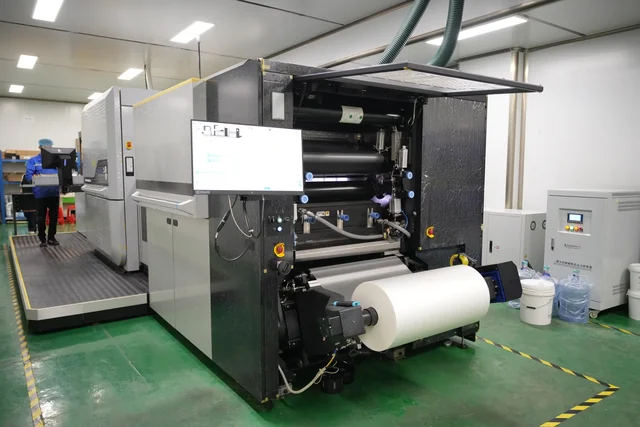
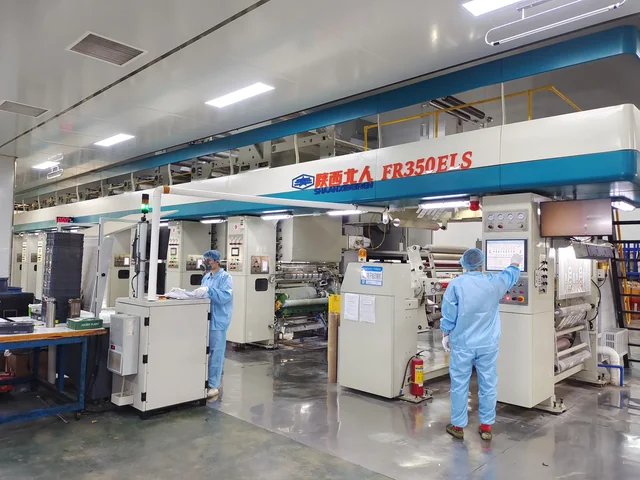
Company-supplied production photos. Meet DIT and view our production support · Read production licenses and their named holders
Buyer questions
What is the difference between a stand-up pouch and a spout pouch?
Stand-up describes the bottom-gusset construction used for upright presentation; spout describes the dispensing fitment. One pouch can have both. Specify the standing base, spout position, cap and filled-product requirements together.
Can a spout pouch be made without a standing bottom?
Yes, a no-bottom construction can be discussed as a three-side-seal spout pouch. Provide the finished width and height, fitment position, fill volume and intended presentation. A spout does not by itself make the pouch stand upright.
Can I discuss a refill pouch with a spout for a household liquid?
Yes. Send the product type, relevant compatibility requirements, target fill volume and filling process. Explain whether the contents will be poured into another container. The proposed laminate, fitment and seals need review for your formulation; a pictured pouch does not confirm suitability.
Which spout diameter should I choose?
Start with the contents, the desired dispensing flow and your filling equipment. Examples for review include inner diameters of 8.6, 15, 16 and 22 mm. Ask us to confirm the fitment, cap and pouch combination before approving the specification.
Can I order a custom printed spout pouch before choosing its exact dimensions?
You can begin an inquiry with the product, target capacity and quantity. Final dimensions, material and fitment must be agreed before production, with a sample-size and filling review where needed.
Are spout pouches filled through the spout?
That depends on the agreed supply condition and your equipment. Identify whether your process needs filling through the fitment or through a separate open edge, and confirm the remaining sealing steps on the drawing.
Does a water-capacity reference apply to thick liquids?
Do not assume the same usable capacity. Product flow, density, filling conditions and headspace need review with the proposed pouch. Use a product-specific filling check to confirm the pack size.
Is a 500-piece spout pouch order available?
Send the quantity for each design, size, material and fitment. The minimum depends on the complete construction and printing method; we will confirm whether a 500-piece project is feasible in the quotation.
YOUR NEXT STEP
Send Jack your packaging brief
Share your product, approximate quantity, bag dimensions and delivery destination. If a detail is undecided, say so; the specification can be reviewed before quotation.
jack@ditpackaging.com · +86 188 9665 3135
Guangzhou DIT Packaging Trading Co., Ltd.
广州迪爱特包装贸易有限公司
Supported by digital production in Guangzhou and gravure production in Shaoguan. See production photos and production licenses with their named holders.